
‘The Smashing Machine' Review: Benny Safdie and Dwayne Johnson's Sports Bio-Drama is Full of Light Jabs
Just like the Coen brothers, the Safdies (Benny and Josh) have now hit their ‘we’re on a break’ era. Crazily enough, their different solo pursuits are both sports bio-dramas. Josh's Marty Supreme, arriving imminently, looks like every other conventional biopic ever, but I was intrigued by Benny’s verité-like Mark Kerr biodrama The Smashing Machine based on the HBO doc of the same name. Plus I was so pumped to see Dwayne Johnson starring in a non-CG slopfest for the first time in years and his first indie flick since, shit, Southland Tales. However, Benny's immersive approach only takes light jabs. While I can appreciate his meticulous craft and detail, The Smashing Machine only scratches the surface on Mark Kerr, a subject who isn’t as interesting as its filmmaker thinks he is. Ultimately, it’s Benny Safdie holding Mark Kerr up like Rafiki with Simba and me not getting why he's holding him up in the first place.
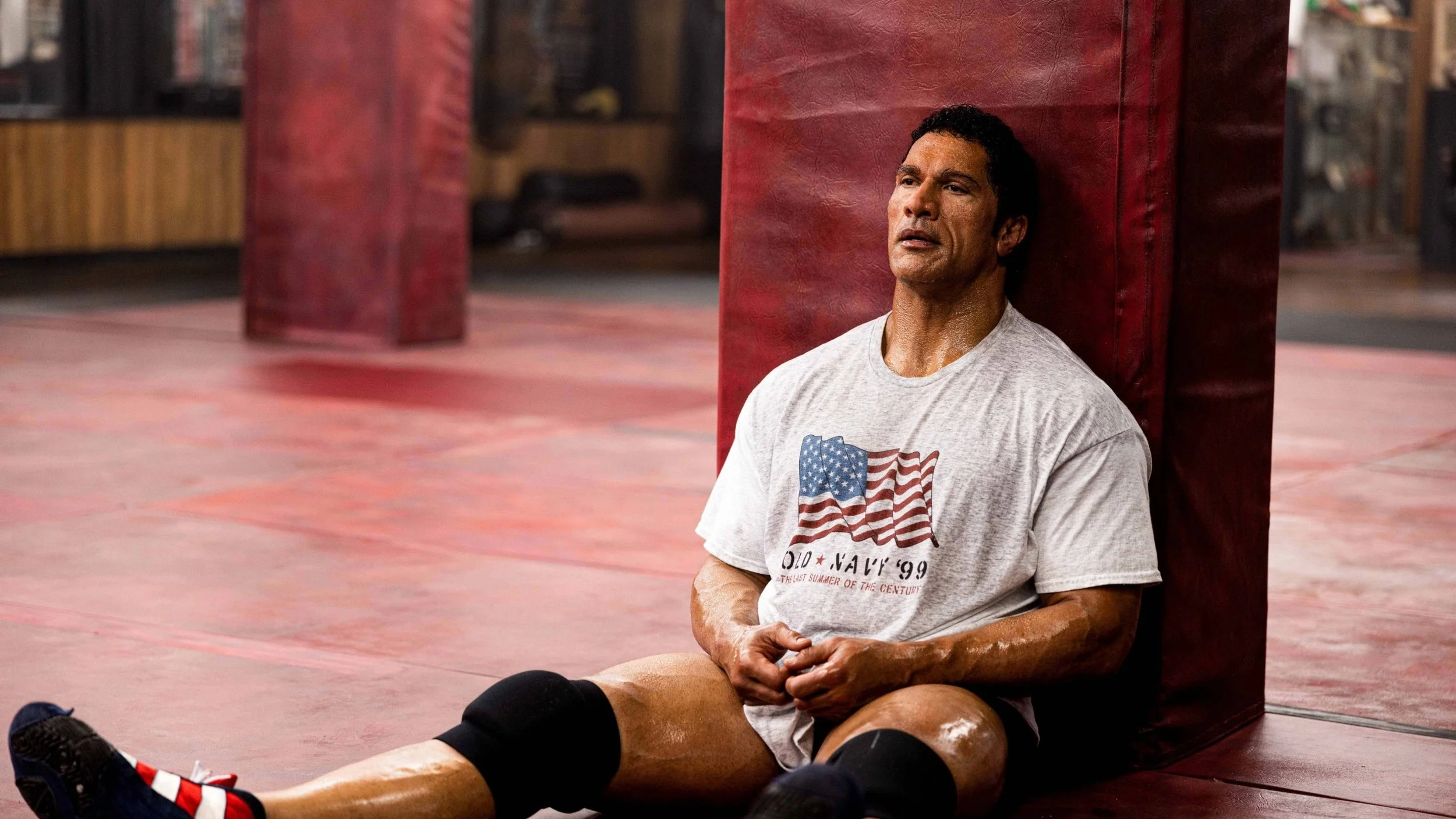
Image copyright (©) Courtesy of A24
MPA Rating: PG-13 (for crude/sexual material, violence/bloody images, and brief partial nudity)
Runtime: 2 Hours and 3 Minutes
Language: English
Production Companies: Out for the Count, Seven Bucks Productions, Magnetic Fields Entertainment
Distributor: A24
Director: Benny Safdie
Writer: Benny Safdie
Cast: Dwayne Johnson, Emily Blunt, Ryan Bader, Bas Rutten, Oleksandr Usyk
U.S Release Date: August 29, 2025
The movie is set in the years 1997 to 2000, UFC’s "peach fuzz" phase. One of the biggest stars is Mark Kerr (Dwayne Johnson), a tremendous fighter with a golly-gee, mild-mannered but temperamental man. He trained under his longtime best friend and fellow fighter Mark Coleman (Ryan Bader) and by 1999, he had never lost a fight in his career. When not competing in the UFC or the now-defunct mixed martial arts PRIDE Fighting Championship in Japan, he spends his time at home in Phoenix, Arizona, with his longtime girlfriend, Dawn Staples (Emily Blunt). Behind the scenes, he struggles with drug addiction, shooting up painkillers, and Staples only makes things worse by antagonizing him, both at home and right before he steps into the ring. A change to the "no holds barred" rule in the PRIDE Fighting Championships sends Kerr into a downward spiral, leading to his first ever loss. While he takes time off to battle his addiction and enters rehab, Coleman climbs the ranks.
Benny Safdie makes The Smashing Machine look viscerally retro
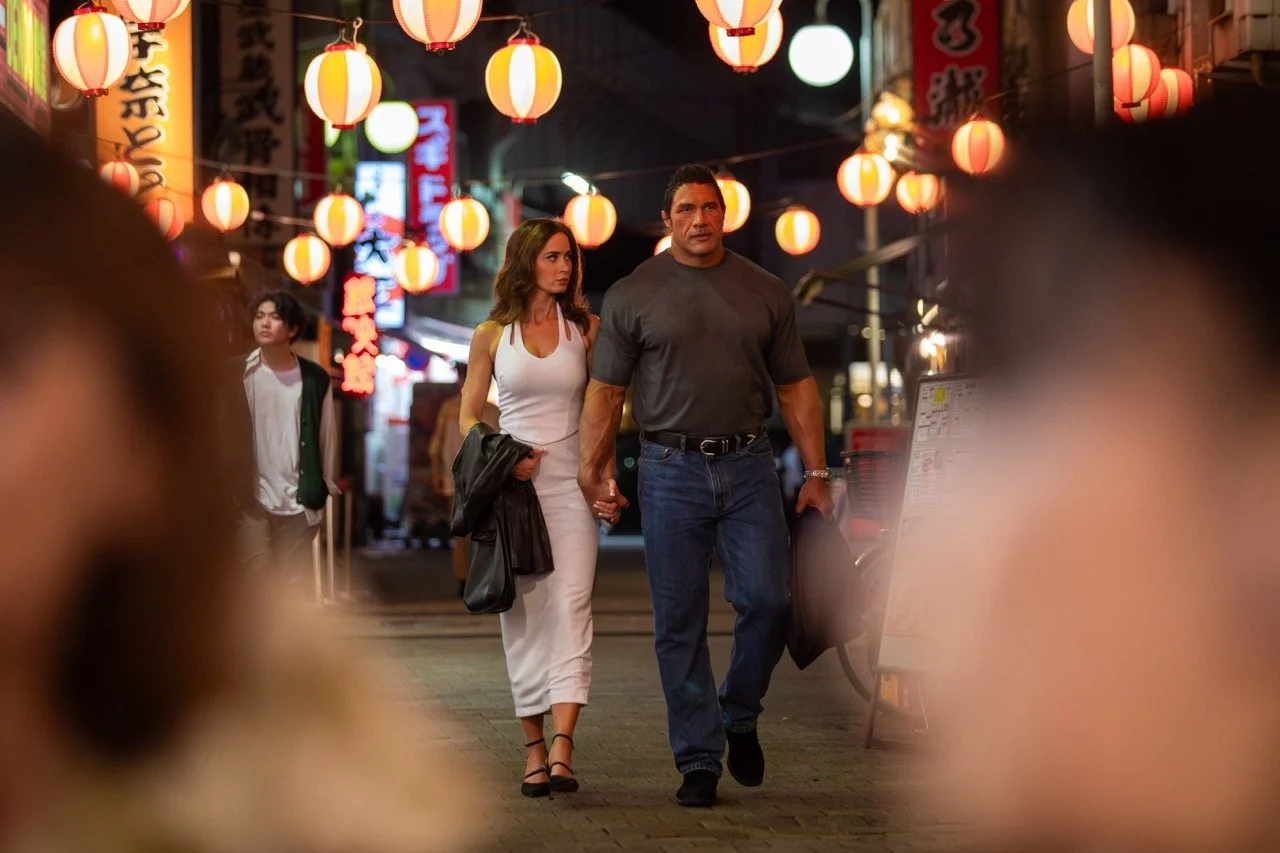
(L-R) Emily Blunt, Dwayne Johnson Credit: Ken Hirama
The Smashing Machine is like Safdie’s ode to his current hyperfixation. Utilizing a bevy of cameras—16mm and 65mm—he and DP Maceo Bishop (The Curse) faithfully recreates the underground fight scene of the late 1990s era, capturing the intimate Y2K-era ambiance. The film adopts a documentarian, third-person handheld perspective, placing you as a curious onlooker—from the PRIDE fighting rings to Kerr's personal life with Staples. The sound design goes the extra mile, with compression-heavy mixing that evokes the textured feel of a homemade 1990s VHS. It sounds as if the source audio was captured straight from the camera, like the kind of tapes you—or your parents, depending on your age—might’ve recorded off the TV long before TiVo briefly entered the scene. Furthermore, Safdie, who also served as the editor, creates a sense of voyeurism that evokes a 90s grungy home video and a French Wave vérité, as evidenced by the yacht rock and occasional pop needle drops from Sublime to Sugar Ray.
Dwayne rocks a one-note characterization of Mark Kerr
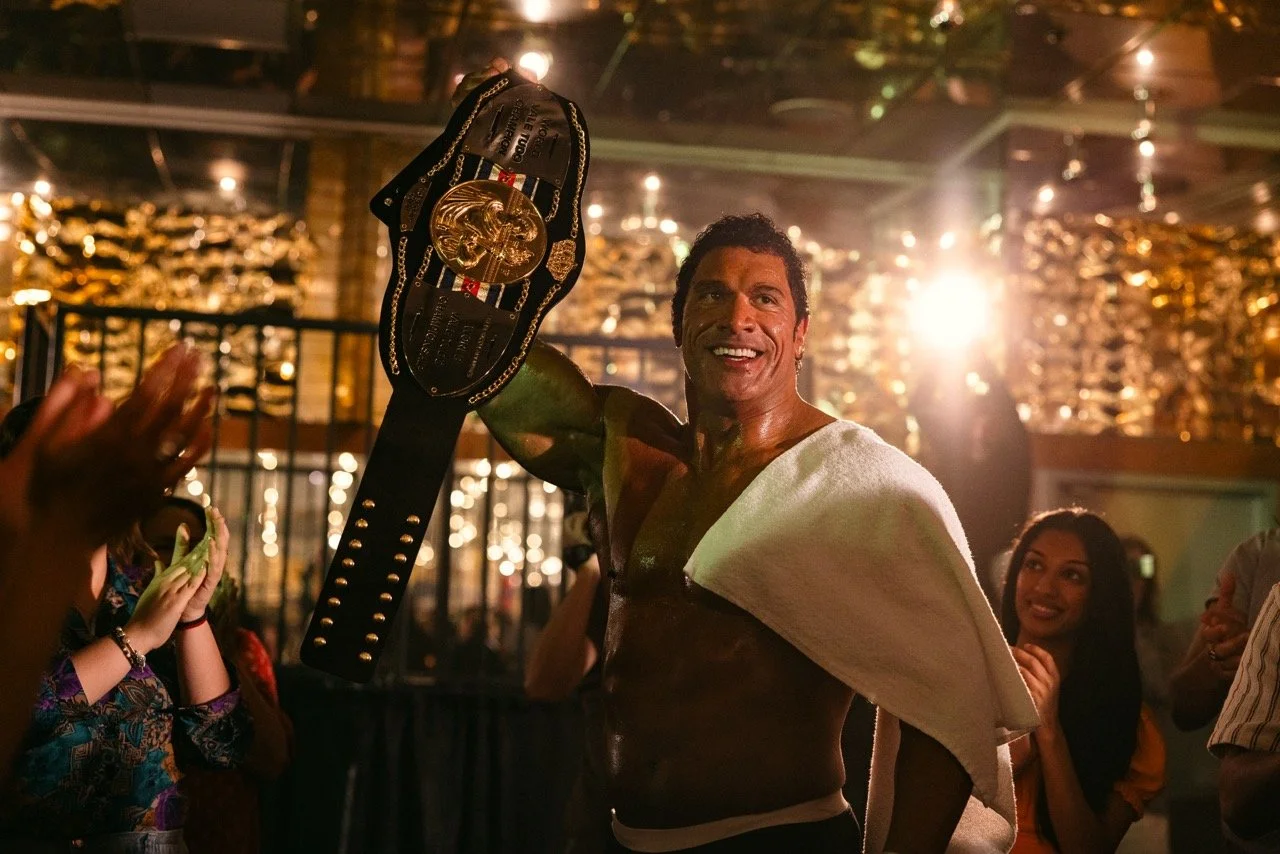
(L-R) Dwayne Johnson, Emily Blunt Credit: Eric Zachanowich
Dwayne Johnson, in possibly his best character portrayal since Pain & Gain, brilliantly channels the gentle attitude and temperament of the real Kerr in not only his speech pattern but also his rigid body language. Kazu Hiro's Oscar-worthy makeup design renders him entirely unrecognizable; however, Johnson's empathetic and subdued portrayal of Kerr is mesmerizing.
In numerous scenes of Kerr and Dawn's home life and toxic relationship, we see fragments of a stunted child. I've been watching plenty of PTA movies, and some of his characters share these same qualities: man-children who are psychologically stunted and buried in their work. Phantom Thread and Punch-Drunk Love rely on the familial figures that surround them to further the intricacies of the men's childlike behavior in adulthood.
But Safdie's portrait ultimately fails to offer more than the basics. He’s too hyperfocused on Kerr as his career unravels, keeping the narrative orbit tightly confined to Dawn and his circle of fighter bros. There’s a certain charm in watching Kerr navigate the sport as part of a surprisingly wholesome community. The camaraderie among the fighters is genuine — brutal and bloody inside the ring, but free of bad blood. Still, these relationships don’t add much to the film’s meditation on Kerr’s inner psyche.
Ringside Romance Rings Alarm Bells
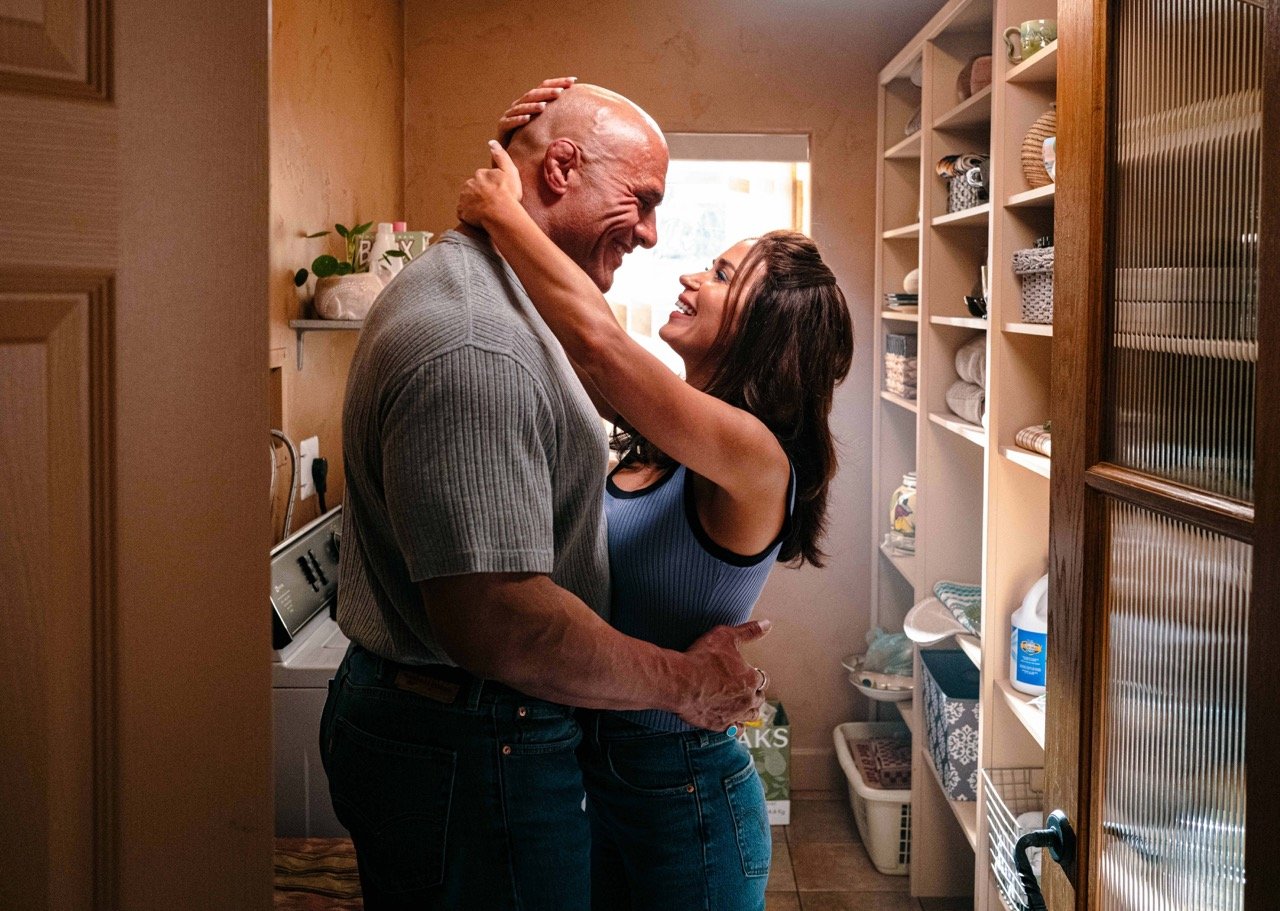
(L-R) Dwayne Johnson, Emily Blunt Credit: Eric Zachanowich
Kerr's toxic, dysfunctional relationship with Dawn is a frequent focus. Safdie’s writing is at its sharpest when their meaningless arguments escalate from zero to ten in seconds, often triggered by Kerr being particular about food or Staples insensitively seeking attention. These were the moments I found least intriguing and frustratingly, they dominate much of the runtime. This is Emily Blunt and Dwayne Johnson’s second movie together after the forgettable Jungle Cruise. They have even better chemistry this time around, like your most toxic high school couple friends who refuse to end their relationship even though you know they would be much better off apart. Yet, it's all very empty and repetitive, as Safdie's exploration remains relatively stagnant.
Kerr serves as a microcosm of a larger issue the film touches on—the indifference of sports organizations toward the well-being of their athletes. He battles painkiller addiction and struggles to stay sober, which I respect Safdie for not sensationalizing. Still, the film offers little in the way of compelling justification for Kerr’s significance beyond his professional achievements.
Final Statement
Benny Safdie's technical mastery and filmmaking craft are undeniable in The Smashing Machine, but despite a respectable performance from Dwayne Johnson, the film delivers a dull, one-note character portrait, resulting in an underwhelming, light jab of a biodrama.
Please consider supporting Rendy Reviews. We’re an independent run, Gen-Z and Black-owned entertainment outlet. You can donate to our Paypal or Venmo to help keep our site running. Or become a subscriber for access to 13-years worth of reviews, exclusive interviews, and more! A free way to support is a sign up for the Rendy Reviews’ newsletter and get weekly emails about latest on movie reviews, interviews with film artisans, features, and more.
